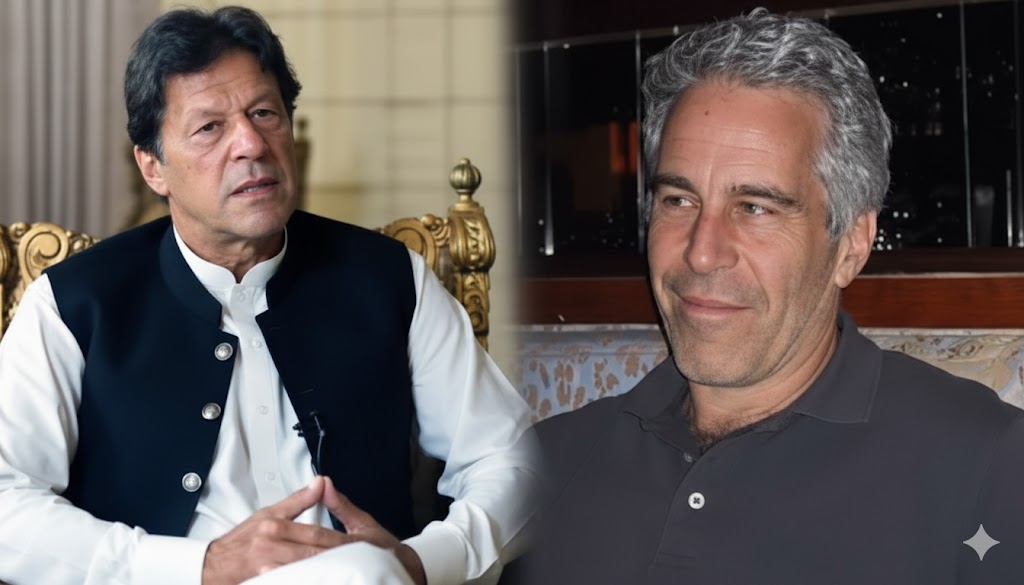
The release of Jeffrey Epstein court documents has sparked intense global interest, especially around high-profile names mentioned in emails and contact records. One such name is Imran Khan, former Prime Minister of Pakistan. This has led many people to ask: Is Imran Khan linked to Jeffrey Epstein?
This article breaks down what the Epstein files say about Imran Khan, what they do not prove, and how the public, media, and political groups are reacting separating facts from speculation.
Is Imran Khan Mentioned in the Epstein Files?
Yes, Imran Khan is mentioned in the Epstein documents but only in limited and indirect contexts.
One confirmed reference appears in a 2013 email by a former United Nations official. In the email, Imran Khan, then a well-known international figure but not yet prime minister is described as a “London society lion.” The discussion centers on whether his influence in Pakistan could be used to support polio eradication efforts, not personal or criminal activity.
In addition, Khan’s name appears briefly in broader document collections, such as email chains and third-party references. These types of mentions are common in large document dumps involving diplomats, politicians, and public figures worldwide.
Importantly, these mentions are descriptive, not accusatory.
What the Epstein Files Do Not Show About Imran Khan
Despite viral social-media claims, the Epstein files do not provide evidence that:
- Imran Khan visited Jeffrey Epstein’s private island
- Imran Khan had a personal relationship with Epstein
- Imran Khan was involved in Epstein’s sex-trafficking crimes
- Any legal complaint or witness testimony accuses Khan of wrongdoing
Several online rumors claiming such links have been fact-checked and debunked by journalists and public figures. Simply appearing in a document does not mean involvement in criminal activity.
Media Coverage: How Journalists Interpret the Mentions
Most credible media outlets stress context and caution when reporting on Imran Khan’s appearance in the Epstein files.
Journalistic analysis highlights that:
- The references date back to before Khan became prime minister
- They reflect third-party commentary, not firsthand evidence
- Epstein’s own opinions about political figures are unreliable and subjective
Some reports note that Epstein described Imran Khan as unpredictable or a “threat,” but this is generally interpreted as commentary on Khan’s political influence, not an allegation of criminal behavior.
Public Opinion and Political Reactions

Supporters of Imran Khan
Supporters of Imran Khan, particularly members and voters of Pakistan Tehreek-e-Insaf (PTI), argue that the Epstein emails show Khan was viewed as a challenge to powerful international interests.
In this view, Epstein’s remarks are seen as:
- Evidence of Khan’s global relevance
- Proof that his independent foreign policy stance worried elite circles
Supporters strongly reject claims linking Khan to Epstein’s crimes and describe them as politically motivated misinformation.
Critics and Opponents
Imran Khan’s political critics generally do not focus on the Epstein files. Instead, they center their criticism on:
- Governance decisions
- Legal cases inside Pakistan
- Domestic political controversies
Among critics, the Epstein references are often considered irrelevant or exaggerated.
Social Media Reactions and Misinformation
Social media platforms have played a major role in spreading confusion and speculation.
Common patterns include:
- Assuming that a name mention equals guilt
- Circulating screenshots without context
- Mixing conspiracy theories with real documents
At the same time, many users and fact-checkers have pushed back, emphasizing the need to distinguish document mentions from criminal accusations.
Key Takeaway: Facts vs. Rumors
The Epstein files do not accuse Imran Khan of any crime and do not link him to Jeffrey Epstein’s abuse network.
His name appears only in:
- Emails written by third parties
- Contextual discussions about influence and politics
- Non-criminal, historical references
Mention does not mean involvement. Understanding this distinction is essential when evaluating high-profile document releases.
Frequently Asked Questions
Was Imran Khan involved with Jeffrey Epstein?
No credible evidence shows Imran Khan had any involvement with Jeffrey Epstein’s criminal activities.
Did Imran Khan visit Epstein’s island?
No verified records or documents support this claim.
Why is Imran Khan’s name in the Epstein files?
His name appears in third-party emails discussing his political influence, not in connection with crimes
Conclusion
The appearance of Imran Khan’s name in the Epstein files has generated significant online attention, but a close examination of the documents shows that these references are limited, contextual, and non-accusatory. There is no credible evidence linking Imran Khan to Jeffrey Epstein’s criminal activities, private islands, or abuse network.
Most verified mentions relate to third-party emails and political commentary, often reflecting Khan’s public influence before becoming prime minister rather than any personal connection to Epstein. Media reporting overwhelmingly stresses caution, while misinformation has largely spread through social media speculation rather than documented facts.
Ultimately, the controversy highlights a broader issue with large document releases: being mentioned does not imply involvement or guilt. Readers are best served by relying on verified sources, understanding context, and resisting viral narratives that blur the line between fact and rumor.
As the Epstein document releases continue to be examined, the evidence so far makes one point clear Imran Khan is not accused of wrongdoing in the Epstein files. read more
About the Author