Introduction
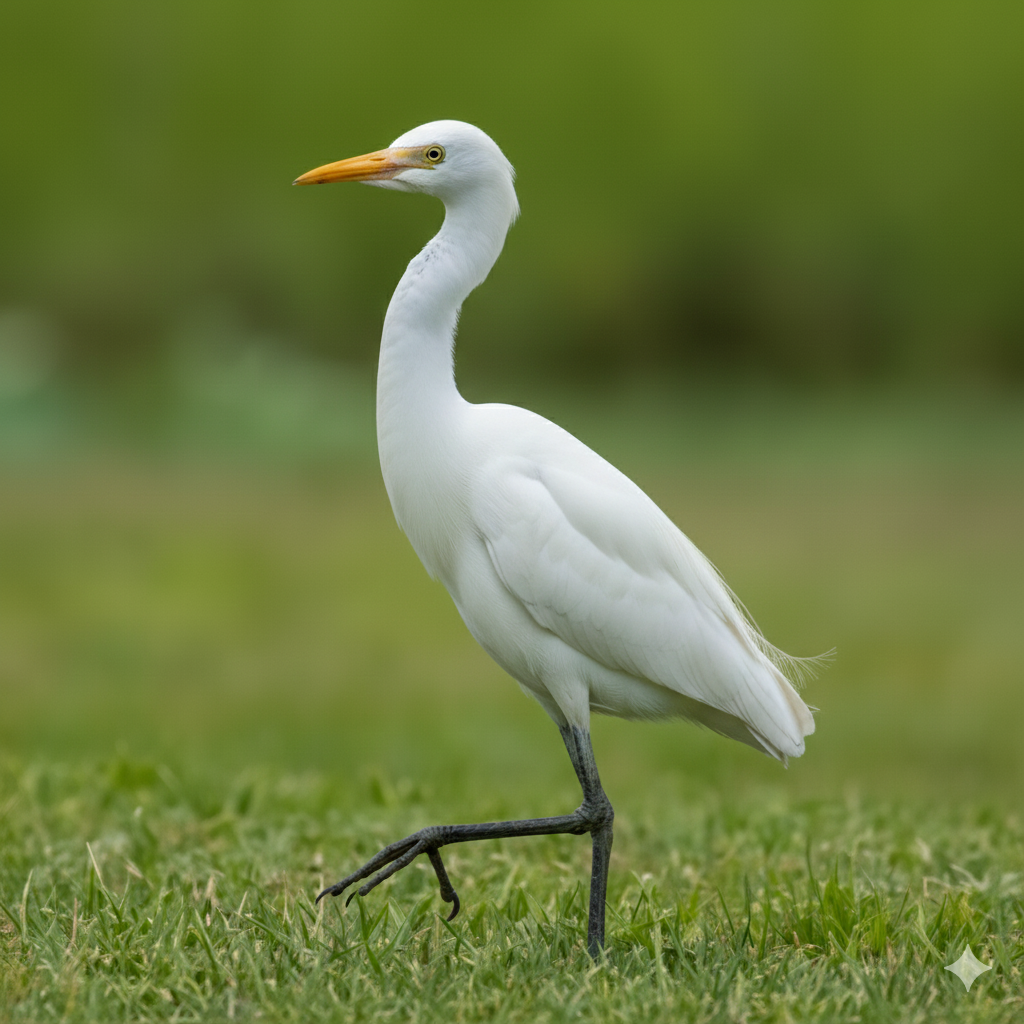
The Cattle Egret (Bubulcus ibis) is a small but fascinating bird, often seen following grazing animals like cows, buffaloes, and horses to catch insects disturbed by them. Unlike other egrets that stick to wetlands, this bird thrives in open fields and farmlands.
Despite its modest size, the Cattle Egret plays a vital ecological role, helping control insect populations and coexisting peacefully with humans and livestock. This guide will cover everything about this charming bird from its appearance and feeding habits to migration, breeding, and its relationship with humans.
Distribution and Habitat
Cattle Egrets were originally native to Asia, Africa, and parts of Europe, but today they are found almost worldwide, including the Americas and Australia. Their ability to adapt to human-altered landscapes has made them one of the fastest-spreading bird species globally.
Habitat Preferences
- Farmlands and Pastures: Ideal for following livestock and catching insects.
- Wetlands and Marshes: They sometimes visit rice paddies, ponds, and rivers for food.
- Urban Areas: Parks, golf courses, and suburban open spaces are also frequented by these birds.
This adaptability allows them to thrive in tropical, temperate, and even semi-arid regions.
Migration and Movements
Cattle Egrets are partially migratory:
- Long-distance migrations: Populations in colder regions often travel to warmer areas during winter.
- Local movements: Birds shift between fields or wetlands within their home range in search of food.
- Flight behavior: They fly with necks retracted and wings flapping steadily, often covering short distances repeatedly while feeding.
This mobility ensures they always have access to food, no matter the season.
Ecology and Behaviour
The Cattle Egret is highly social and has a unique ecological role. Its habit of following livestock allows it to feed efficiently while also controlling insect populations.
- Social structure: Often seen in flocks, especially during feeding or nesting.
- Adaptability: Can live in farmland, wetlands, and even urban areas.
- Predator avoidance: Colonial nesting helps reduce risks from snakes, crows, or other predators.
This behavior makes the bird a natural ally to farmers, reducing the need for chemical insecticides.
Types
Cattle Egrets are divided into two main forms: Western Cattle Egret and Eastern Cattle Egret. While very similar in appearance, they have regional and seasonal differences.
Western Cattle Egret
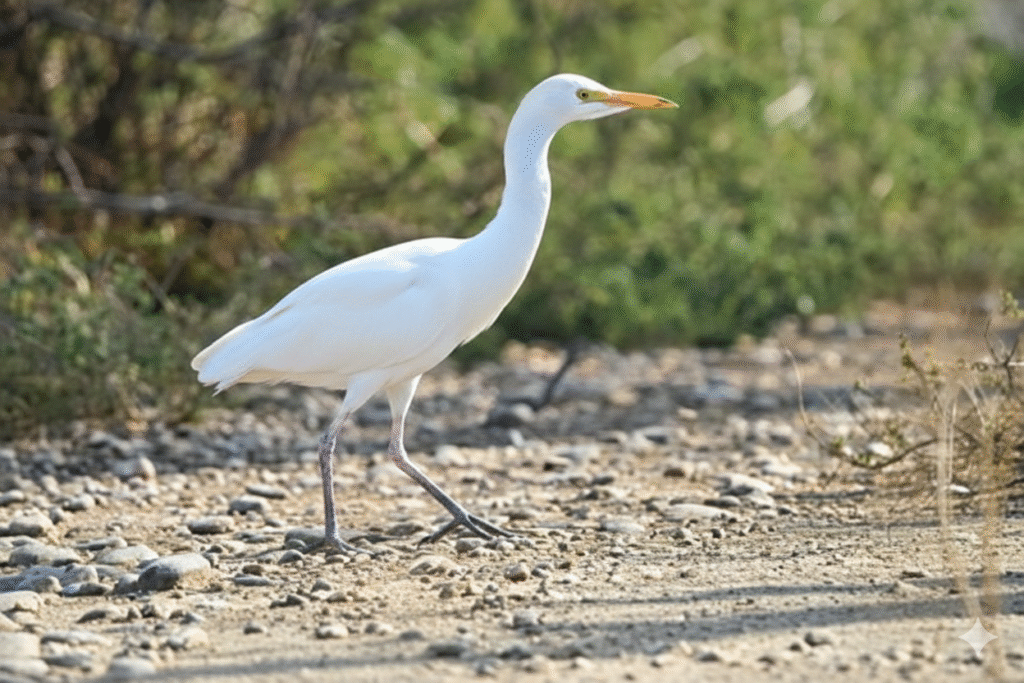
- Appearance: Mostly white with a yellow bill and yellowish legs in winter; develops golden-orange plumes in the breeding season.
- Examples:
- Southern France: In winter plumage, looks almost identical to Eastern Cattle Egrets.
- Maui, Hawaii: Juveniles may have a black bill for a short period after fledging.
- Jacutinga, Minas Gerais, Brazil: Large flocks often gather in trees.
- Southern France: In winter plumage, looks almost identical to Eastern Cattle Egrets.
Eastern Cattle Egret
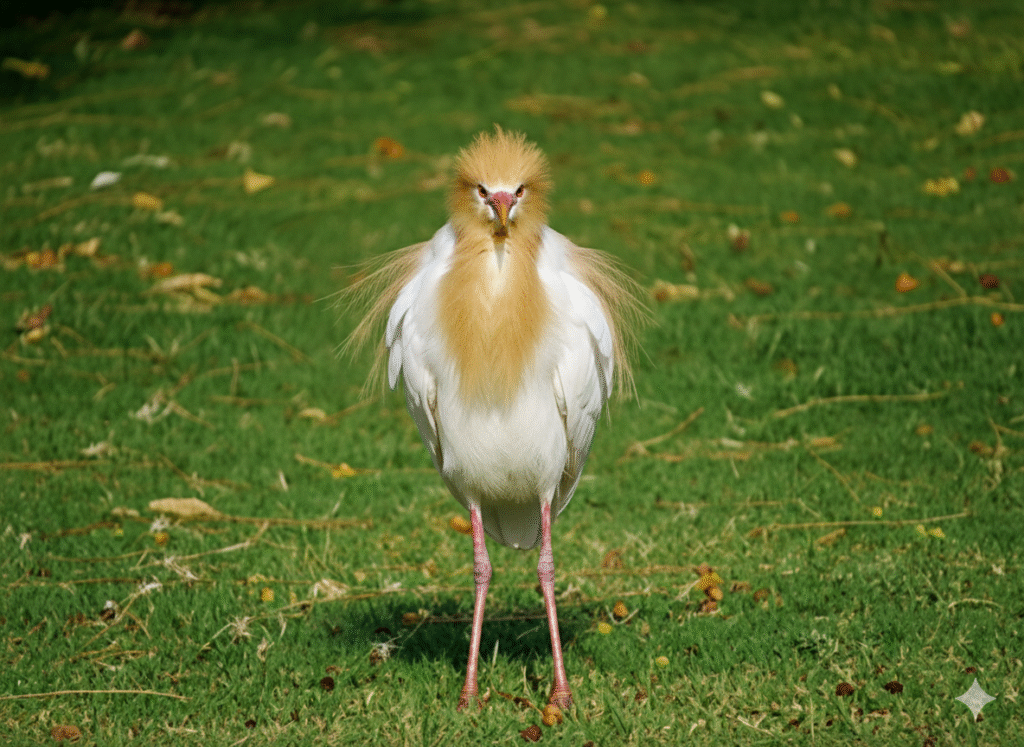
- Appearance: Similar to the Western form but native to Asia and Oceania. Breeding season brings bright orange plumes.
- Examples:
- India: In Chennai, egrets display bright orange plumes during courtship.
- Winter Plumage: Mostly white, making it hard to distinguish from Western Cattle Egrets.
- India: In Chennai, egrets display bright orange plumes during courtship.
Both types share the same behaviors, such as following livestock, feeding on insects, and nesting in colonies. Differences are mostly regional and seasonal, requiring careful observation to identify.
Voice
Cattle Egrets are relatively quiet:
- Common sounds: Soft “clucking” or “rick-rick” noises, usually during feeding or flight.
- Breeding season calls: Slightly more vocal but not melodious like songbirds.
Their low vocal activity helps them stay unobtrusive while feeding with livestock.
Breeding
Cattle Egrets are colonial breeders, often nesting in trees, shrubs, or reed beds near water bodies or open fields.
- Nest: Made of sticks and lined with grass or leaves.
- Eggs: 3–5 pale blue or green eggs per clutch.
- Incubation: 23–26 days with both parents taking turns.
- Chicks: Fledge after about 30 days, becoming independent gradually.
- Breeding displays: Males show off golden-orange plumes to attract females.
Colonial nesting helps protect chicks from predators and creates a safe communal environment.
Feeding
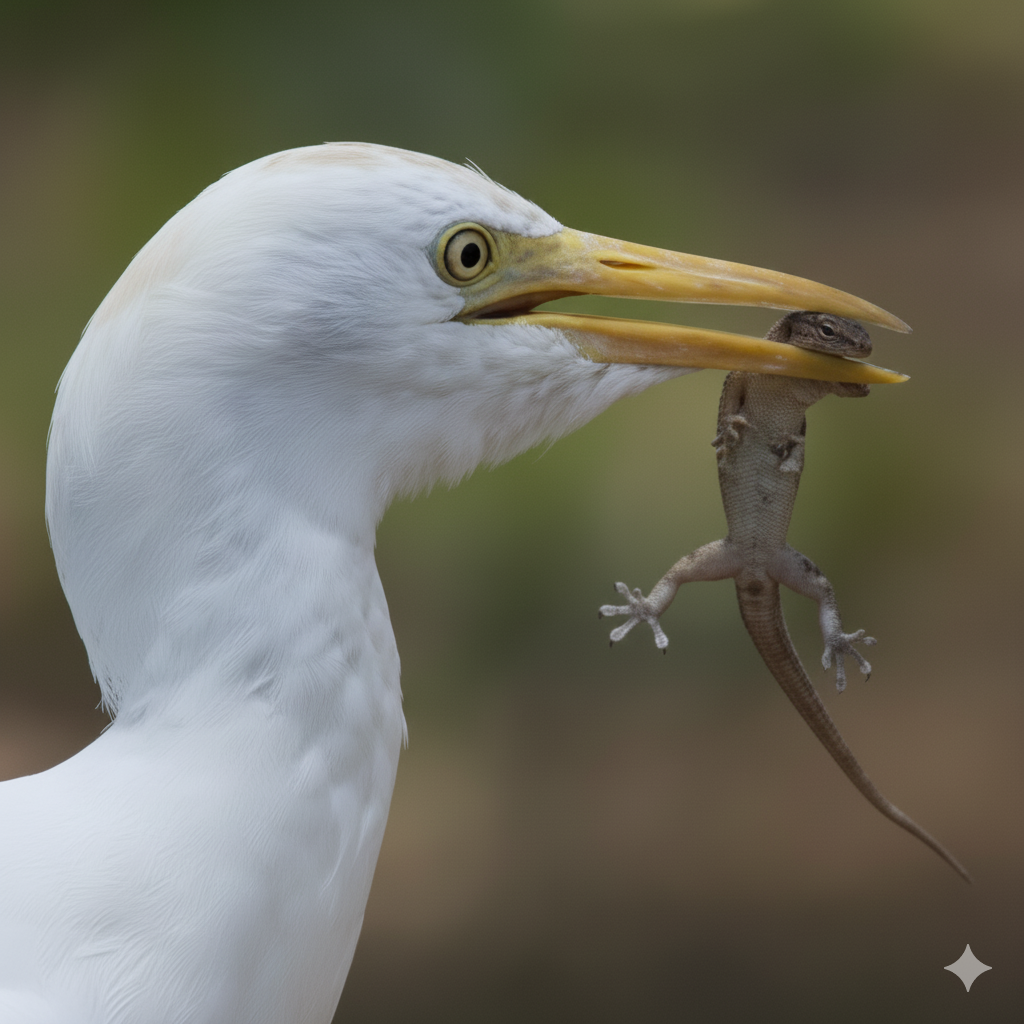
The Cattle Egret’s diet is opportunistic:
- Primary food: Insects like grasshoppers, crickets, and flies.
- Secondary food: Small frogs, lizards, and occasionally fish.
- Feeding strategy: Often follows grazing animals to catch insects disturbed from the grass.
- Adaptability: Can feed in grasslands, wetlands, mudflats, and even near human settlements.
This flexible diet allows the species to thrive in various environments worldwide.
Threats
Despite being resilient, Cattle Egrets face several threats:
- Habitat loss: Urban expansion and agricultural development reduce feeding and nesting sites.
- Pesticides: Chemical use in farmlands can harm birds directly or reduce their insect food.
- Predators: Eggs and chicks are vulnerable to snakes, crows, and mammals.
- Human disturbance: Nesting colonies can be disrupted by construction or tree clearing.
Their adaptability, however, helps maintain stable populations despite these challenges.
Status
Cattle Egrets are classified as Least Concern by the IUCN.
- Population trend: Generally increasing worldwide due to adaptability.
- Global expansion: Considered one of the fastest-spreading bird species in the last century.
Relationship with Humans
Cattle Egrets have a positive relationship with humans, particularly farmers:
- Pest control: Eating insects around livestock helps reduce chemical pesticide use.
- Birdwatching favorite: Their behavior and breeding plumes attract birdwatchers and photographers.
- Minor nuisance: Occasionally, large nesting colonies near farms or urban areas may be considered a problem.
Overall, these birds coexist peacefully with humans and provide ecological benefits.
Conclusion
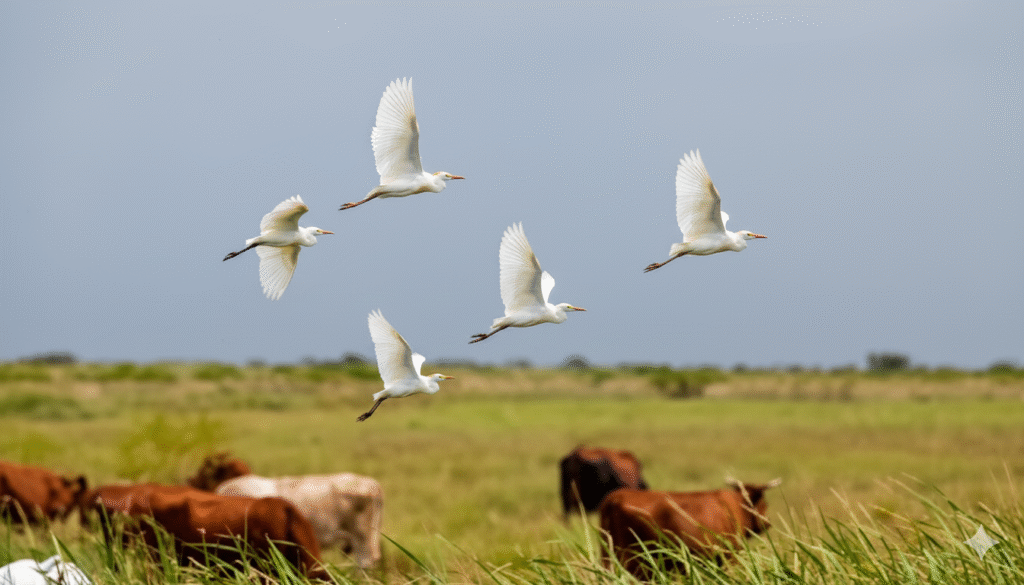
The Cattle Egret is a small but remarkable bird that demonstrates adaptability, charm, and ecological importance. From golden plumes in the breeding season to following livestock in fields worldwide, this bird is both helpful and fascinating to observe.
Whether you are a beginner birdwatcher, a farmer, or simply a nature enthusiast, spotting a Cattle Egret is a rewarding experience. read more
About the Author