Introduction
Storm damage: what would you do if a storm ripped off your roof tonight or flooded your basement by morning? It’s a scary thought, but one that thousands of families face every year. In fact, severe weather causes over $15 billion in property losses annually, leaving homeowners with costly repairs, insurance headaches, and sleepless nights.
From shattered windows during windstorms to hidden mold after floods, the damage can last long after the storm passes. The good news is that most risks can be reduced—or even prevented—with simple storm preparedness steps.
This guide will break down the seven most common types of storm damage, their real costs, how to prevent them, and the recovery steps you need to take. Whether you’re protecting your home for the first time or preparing for the next storm season, you’ll find clear, practical strategies here. Let’s explore how to safeguard your home and recover with confidence.
What Is Storm Damage?
Storm damage refers to any harm caused to property by severe weather events like wind, hail, floods, or lightning. For homeowners, storm damage isn’t just a broken fence or a leaky roof—it’s also a classification used by insurance adjusters to decide repair coverage and payout.
Why does this matter? Knowing the type of storm damage classification can protect your finances and speed up recovery. For example, hail damage may lead to roof replacement under standard homeowners’ insurance, while flood damage usually requires a separate policy through FEMA’s National Flood Insurance Program.
Here’s how the common types of storm damage compare in impact and coverage:
| Type of Damage | Typical Impact on Property | Insurance Coverage Notes |
| Wind | Missing shingles, fallen trees, and siding damage | Often covered under homeowners’ insurance |
| Flood | Water intrusion, mold, ruined flooring | Usually excluded; requires separate flood insurance |
| Hail | Roof dents, cracked windows, and siding damage | Covered, but the repair scope may be disputed |
| Lightning | Fires, fried electrical systems, and damaged appliances | Typically covered under most policies |
In short, storm damage isn’t just about repairs. It’s about protecting your home, health, and finances by knowing exactly how each type of weather damage affects your coverage.
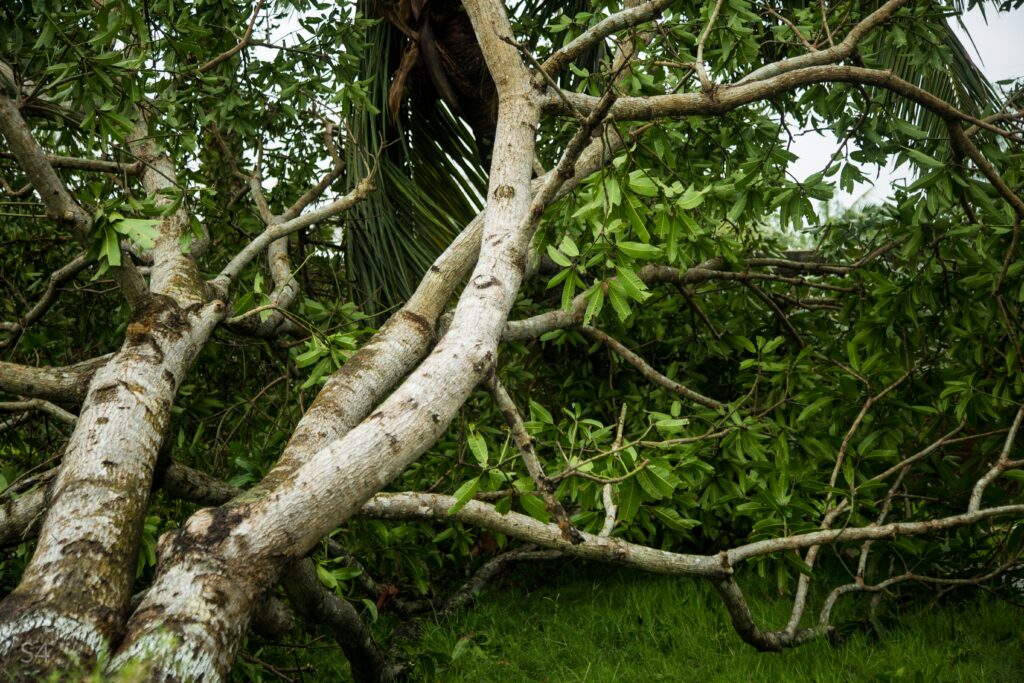
7 Common Types of Storm Damage
Storm damage comes in many forms—some are obvious right away, others stay hidden until weeks later. Knowing the most common types of storm damage helps you spot risks early, reduce repair costs, and prepare stronger insurance claims.
1. Wind Damage
High winds can tear shingles, topple fences, and send debris into windows.
Stat: Straight-line winds cause over $10 billion in U.S. property losses every year (NOAA, 2024).
Prevention tip: Trim weak trees and secure outdoor furniture before storms.
Insurance insight: Most homeowners’ policies cover wind damage, but disputes arise when water intrusion is involved.
2. Tornado Damage
Tornadoes create extreme structural loss within minutes.
Stat: The U.S. averages 1,200 tornadoes annually, with peak risk in the Midwest and South (NOAA, 2024).
Prevention tip: Reinforce garage doors and safe rooms; keep emergency kits ready.
Insurance insight: Tornado damage is usually covered, but secondary flooding may not be.
3. Hail Damage
Hailstorms leave cracked shingles, dented siding, and smashed skylights.
Stat: In 2023, hailstorms caused $14.5 billion in insured losses (Insurance Information Institute).
Prevention tip: Use impact-resistant roofing in areas prone to hail.
Insurance insight: Roof claims are heavily scrutinized—document dents, cracks, and leaks.
4. Lightning Damage
Lightning can spark fires or fry entire electrical systems.
Stat: The U.S. experiences 25+ million lightning strikes annually (NOAA, 2024).
Prevention tip: Install surge protectors and unplug appliances before major storms.
Insurance insight: Policies usually cover lightning strikes, but surge-related electronics may require add-ons.
5. Flood Damage
Floods ruin basements, flooring, and often trigger mold growth.
Stat: Just one inch of water can create over $27,000 in repair costs (FEMA, 2024).
Prevention tip: Install sump pumps and waterproof basement walls.
Insurance insight: Flooding is not covered by standard policies—you’ll need FEMA-backed or private flood insurance.
6. Hurricane & Tropical Storm Damage
These storms bring combined wind and water destruction.
Stat: Since 1980, hurricanes have caused $2.7 trillion in U.S. damages (NOAA, 2024).
Prevention tip: Board windows, secure roofing, and elevate utilities in coastal regions.
Insurance insight: Policies often separate “wind vs. flood” coverage—claims must be filed carefully.
7. Winter Storm Damage
Ice, snow, and freezing temperatures cause costly damage.
Stat: Winter storms led to $6 billion in insured losses in 2023 (III).
Prevention tip: Insulate pipes and ventilate attics to avoid ice dams.
Insurance insight: Burst pipes are typically covered, but neglect-related issues may be denied.
Average Annual Cost of Storm Damage by Type (U.S. Homeowners)
- Wind – $10B+
- Tornado – Regional billions
- Hail – $14.5B
- Lightning – $1B+
- Flood – $27K+ per home
- Hurricanes – $2.7T since 1980
- Winter Storms – $6B (2023)
Regional Variations in Storm Damage
Storm damage looks very different depending on where you live, and each region faces its own risks:
- Southeast (Florida & Gulf Coast): Frequent hurricanes and flooding cause billions in property damage each year.
- Midwest (Tornado Alley): Known for powerful tornadoes that level homes and overturn vehicles.
- Northeast (New England & Mid-Atlantic): Ice storms and blizzards bring frozen pipes, roof collapses, and extended power outages.
- West (California & Mountain States): Flash floods strike after heavy rain, while post-storm wildfires create additional hazards.
Understanding these regional storm damage patterns helps homeowners choose the right insurance coverage and prevention strategies. Check your local risk maps to see which threats apply to your area.
First Steps After Storm Damage
The moments after a storm can feel overwhelming, but acting quickly and safely makes all the difference.
- Ensure safety first—stay clear of downed power lines, damaged roofs, or gas leaks.
- Document everything—take photos and videos before moving or repairing anything.
- Take temporary protective steps—cover broken windows, use tarps for roof leaks, and shut off utilities if necessary.
- Contact your insurance company to start the claim process and alert local authorities if damage impacts your neighborhood.
Common Mistakes to Avoid
- Starting cleanup before documentation.
- Throwing away receipts for repairs or supplies.
- Waiting too long to notify your insurer.
Filing a Storm Damage Insurance Claim
Filing a storm damage insurance claim can feel stressful, but following the right process ensures you don’t leave money on the table. According to the Insurance Information Institute (III), the average homeowner claim for wind and hail damage is $12,913. Acting fast is key.
Step-by-Step Insurance Process
- Contact your insurer immediately—most companies require notice within 48–72 hours.
- Document everything with photos, videos, and written notes before repairs.
- Schedule an inspection and be present to point out all visible and hidden damage.
- Track your claim progress with a log of phone calls, emails, and inspection notes.
Common Mistakes to Avoid
- Underreporting minor damage.
- Throwing away receipts.
- Accepting the first payout without requesting reevaluation.
Role of Public Adjusters
If your claim is large or disputed, consider hiring a licensed public adjuster. Unlike the insurance company’s adjuster, they work for you. Studies show homeowners with public adjusters often receive 20–30% higher settlements.
How to Prevent Storm Damage
If you’re wondering how to prevent storm damage to your home, you’re not alone. Each year, U.S. homeowners face over $15 billion in storm-related losses (NOAA). The good news? Simple prevention steps can drastically reduce risks. In fact, FEMA reports that prepared households save an average of $6 for every $1 spent on mitigation.
Essential Homeowner Checklist
- Trim trees and branches.
- Clear gutters and downspouts.
- Inspect and repair roofs.
- Add storm shutters or impact-resistant windows.
- Install sump pumps and drainage systems.
- Insulate and wrap pipes in winter.
- Set up a backup generator.
Smart Technology Upgrades
- Real-time weather apps.
- Leak and flood sensors with mobile alerts.
- Smart thermostats to protect pipes in cold snaps.
Regional Preparation Tips
- Coastal areas: Stock hurricane kits and install wind-rated shutters.
- Midwest: Anchor outdoor items and reinforce garage doors.
- Northeast: Insulate attics to prevent ice dams.
- Western states: Prepare for flash floods and reinforce drainage after wildfires.
Prevention vs. Repair Costs (Quick Comparison)
| Prevention Measure | Average Cost | Potential Repair Savings |
| Roof inspection | $300 | Up to $15,000 (roof replacement) |
| Sump pump install | $1,200 | $25,000+ (flood cleanup) |
| Pipe insulation | $250 | $10,000+ (burst pipe repair) |
Conclusion
Storms are unpredictable, but storm damage prevention doesn’t have to be. FEMA reports that every $1 spent on preparation saves $6 in recovery costs, proving that small steps today can protect your home and wallet tomorrow.
The key is simple: know the common types of damage, respond quickly with smart storm recovery tips, and invest in preventive measures like roof inspections, gutter cleaning, and emergency kits. These actions not only reduce risks but also strengthen your homeowners’ insurance claims if disaster strikes.
Don’t wait for the next storm. Start now—inspect your roof, clear your gutters, and build a family storm plan. Protecting your home today could save you thousands in repairs tomorrow.
FAQs
Q1: What are the most common types of storm damage?
Wind, hail, flooding, lightning, and roof damage are the most common types.
Q2: Does homeowners’ insurance cover storm damage?
Yes, but coverage varies—flooding often requires separate insurance.
Q3: How can I tell if my roof has storm damage?
Check for missing shingles, leaks, or dents from hail.
Q4: What should I do immediately after storm damage?
Ensure safety, document damage with photos, and contact your insurer.
Q5: How long do I have to file a claim?
Most insurers allow 6–12 months, but file as soon as possible.
Q6: Can storm damage cause mold or long-term issues?
Yes, untreated water damage can lead to mold and structural decay.
Q7: What’s the best way to prepare for storm season?
Inspect your roof, clear gutters, and create an emergency kit.
About the Author