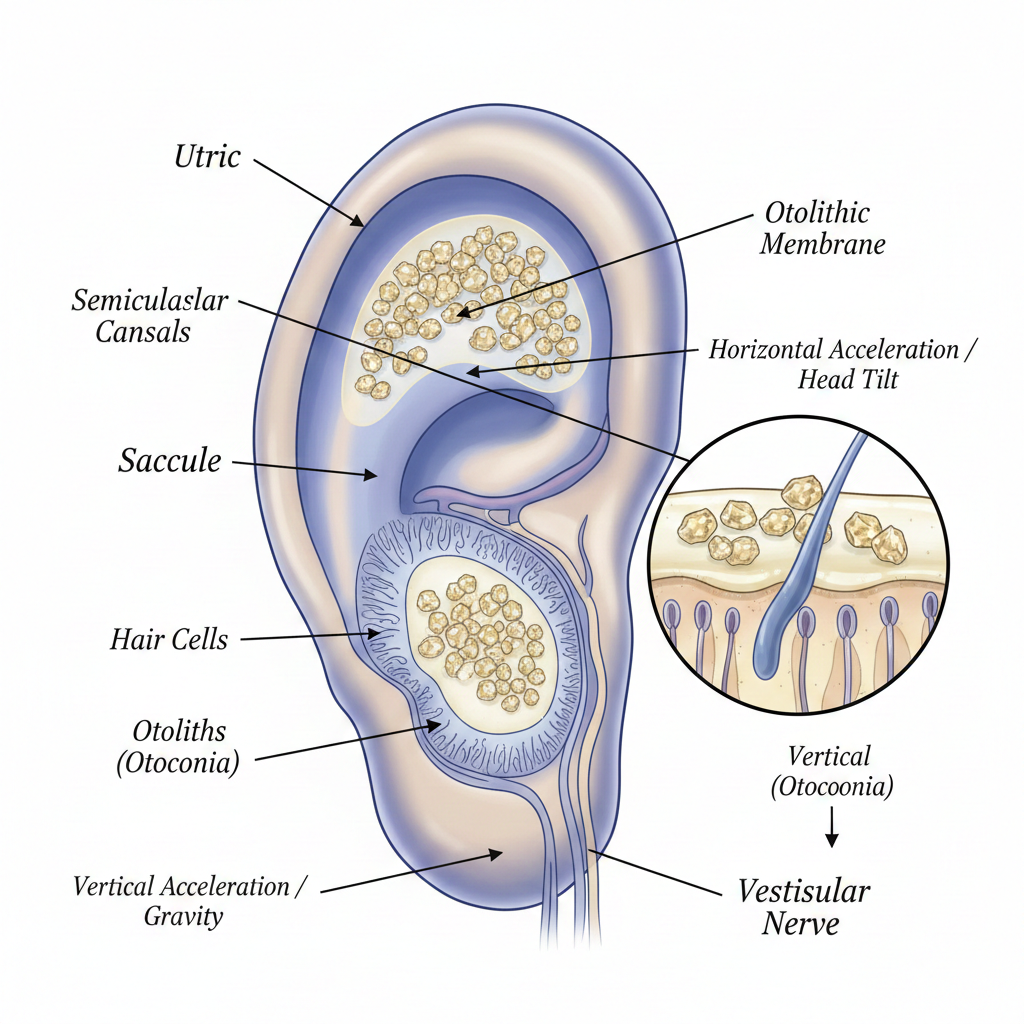
If you’ve ever wondered how your body knows which way is up or how you can walk without falling over there’s a tiny part of your inner ear you’ve probably never heard of: otoliths. These little crystals are so small you’d never notice them, yet they quietly help you stay balanced all day long.
Most people focus on the eardrum or the cochlea when they think about the ear, but otoliths are just as important. In fact, you rely on them every time you take a step, turn your head, or stand up from a chair.
In this guide, I’ll walk you through what that are, how they work, and why they matter using simple, beginner-friendly language.
What Are Otoliths?
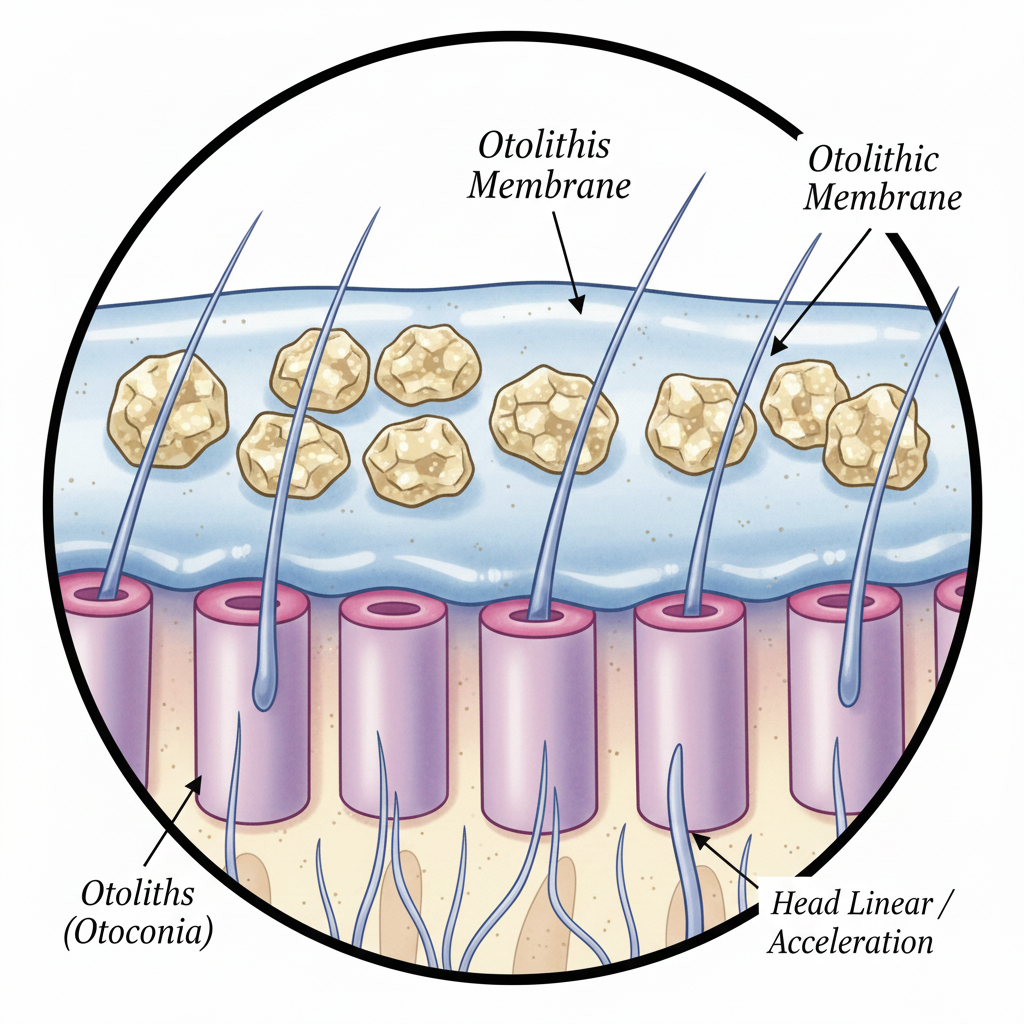
They are tiny crystals made mostly of calcium carbonate. Imagine very small grains of sand so small you can’t see them without special equipment. They rest inside a jelly-like layer in your inner ear, and even though they don’t look like much, they act as little sensors that help you feel movement.
Your body has two main patches of these crystals. They sit on top of very thin hair-like cells that react whenever the crystals shift. It’s a delicate little system, but it’s incredibly smart.
Where Do You Find Otoliths in the Body?
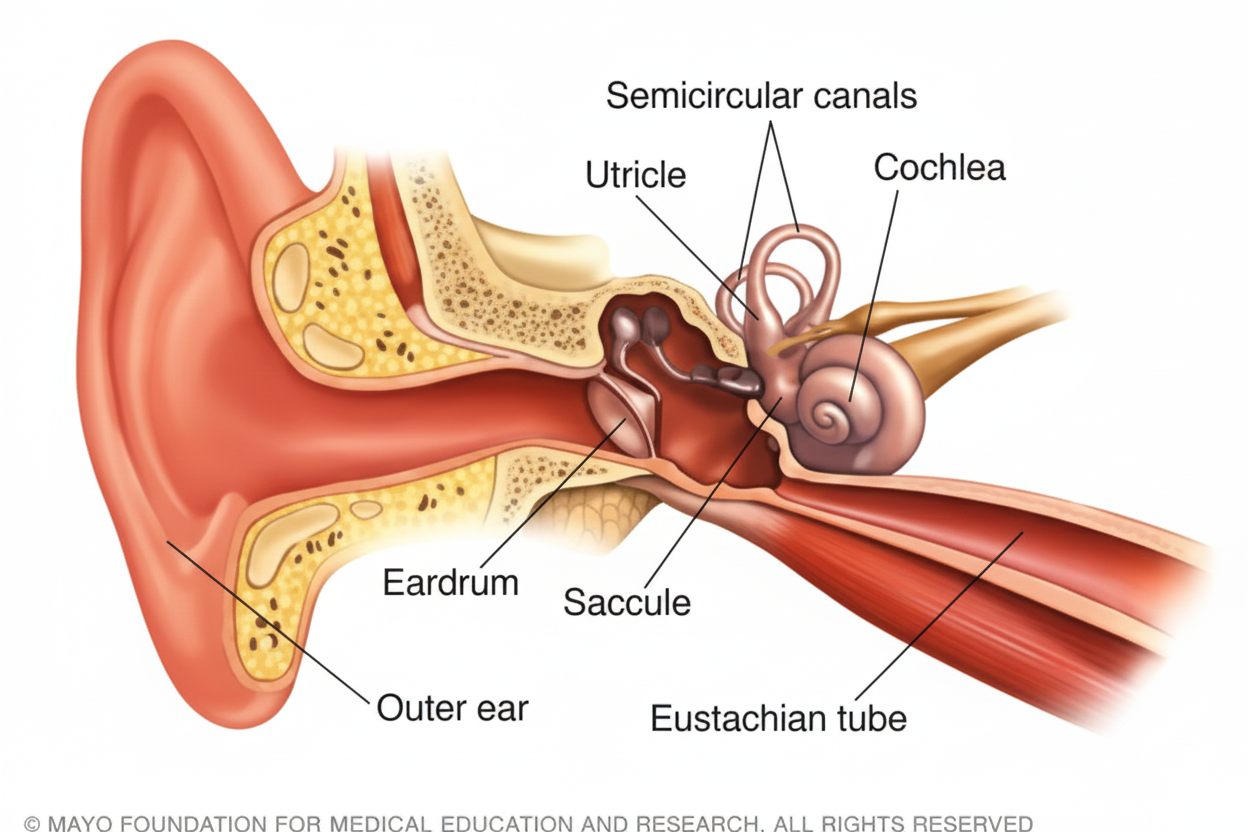
Otoliths sit in two small chambers inside the inner ear:
1. The Utricle
This one helps with side to side and forward/backward movements.
Think about the feeling you get when a car starts moving or stops suddenly that’s the utricle at work.
2. The Saccule
This one helps you detect up and down movements.
If you’ve ever had that funny “ drop ” feeling in your stomach on an elevator, the saccule is responsible.
Together these structures help your brain understand what your body is doing at any moment.
How Do Otoliths Work? (The Super Simple Version)
Let’s break this down as simply as possible:
- You move your head.
- The otolith crystals slide a little because of gravity or acceleration.
- Tiny hair-like cells underneath them bend.
- These hairs send a message to your brain.
- Your brain figures out the direction and speed of your movement.
This process happens constantly, almost like a built-in motion detector. You never feel the crystals moving, but your brain depends on them.
Why Are Otoliths Important?
Even if you never notice them, your otolith help with many important things:
1. They Keep You Balanced
Every time you stand, walk, turn, or tilt your head, otoliths send information that helps your brain keep you steady.
2. They Help You Sense Gravity
They tell your brain which direction is “down,” even when your eyes are closed.
3. They Keep Your Vision Steady
When you move your head, your otoliths help your eyes adjust so the world doesn’t look blurry or shaky.
4. They Guide Everyday Movements
Things like bending over, tying your shoes, or looking up at the sky all rely on signals from your otoliths.
Otoliths in Animals and Science
People aren’t the only ones with that Fish, for example, have much larger otoliths, and scientists study them all the time.
Otoliths in Fish
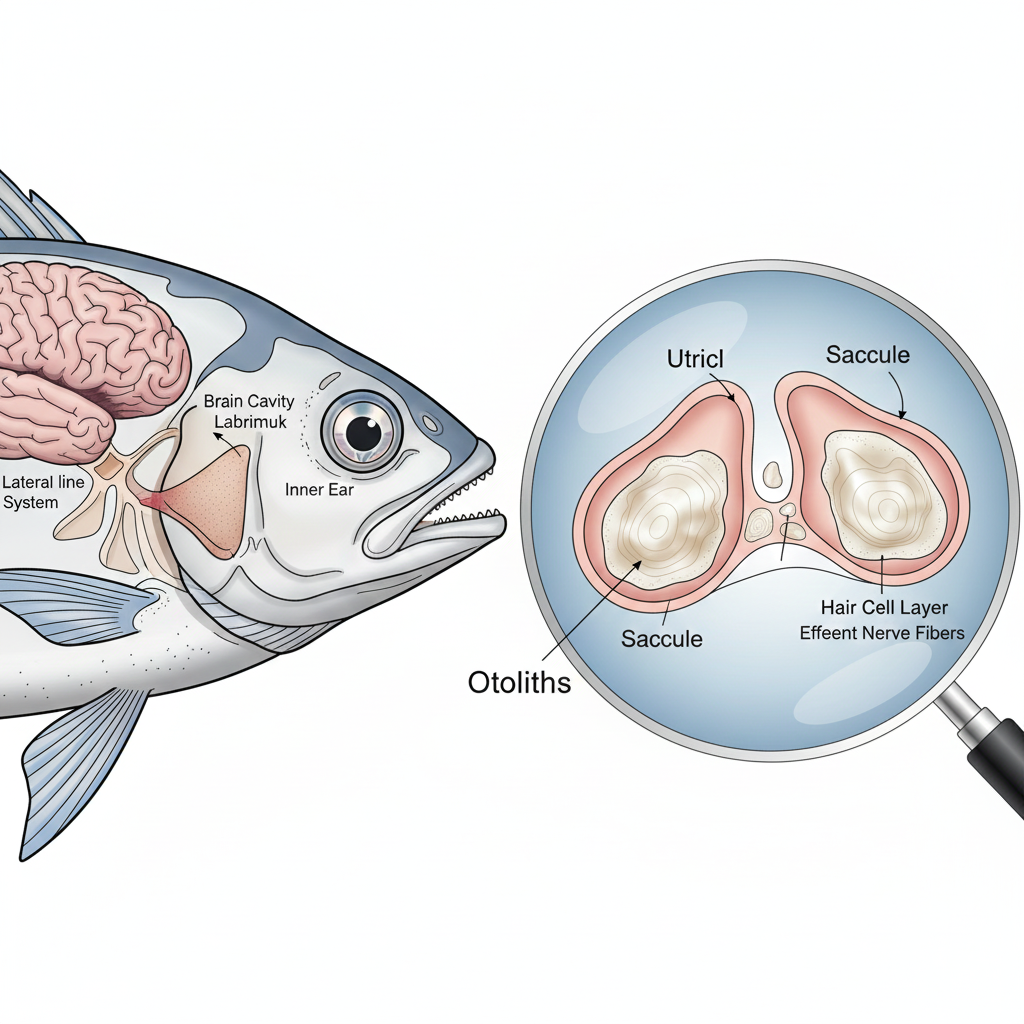
Fish otoliths grow in layers, like rings on a tree.
Because of that, scientists can look at these layers and learn:
- how old the fish was
- where it lived
- what the water was like
- what it ate
This helps researchers understand oceans and fish populations better.
Otoliths in Space Research
NASA also studies otoliths because they behave differently in zero gravity.
Without gravity pulling on the crystals, astronauts can feel disoriented, which helps scientists learn more about balance disorders.
Common Problems Caused by Otoliths
Sometimes a few otolith crystals move into the wrong part of the ear.
When that happens, you may experience BPPV (Benign Paroxysmal Positional Vertigo).
Symptoms of BPPV
- sudden dizziness
- spinning sensation
- feeling unsteady
- nausea
- dizziness triggered by simple movements
This sounds scary, but it’s actually one of the most common balance problems—and usually one of the easiest to fix. A trained doctor or physical therapist can guide the crystals back to their proper spot with simple head movements.
A Few Interesting Otolith Facts
- Your otoliths are active 24/7 even when you’re sleeping.
- Fish otoliths are sturdy and can last long after the fish dies.
- Otoliths regularly rebuild themselves over time.
- Babies rely on otoliths to learn how to sit and walk.
- Your balance changes slightly as otoliths get older.
Conclusion
They may be incredibly tiny, but they play a huge role in your everyday life.
They help you stay balanced, understand movement, and sense gravity. Whether you’re walking down the street, turning your head, or simply standing still, these tiny crystals are always working behind the scenes.
Understanding otoliths gives you a deeper appreciation for how amazing the inner ear really is.read more
About the Author