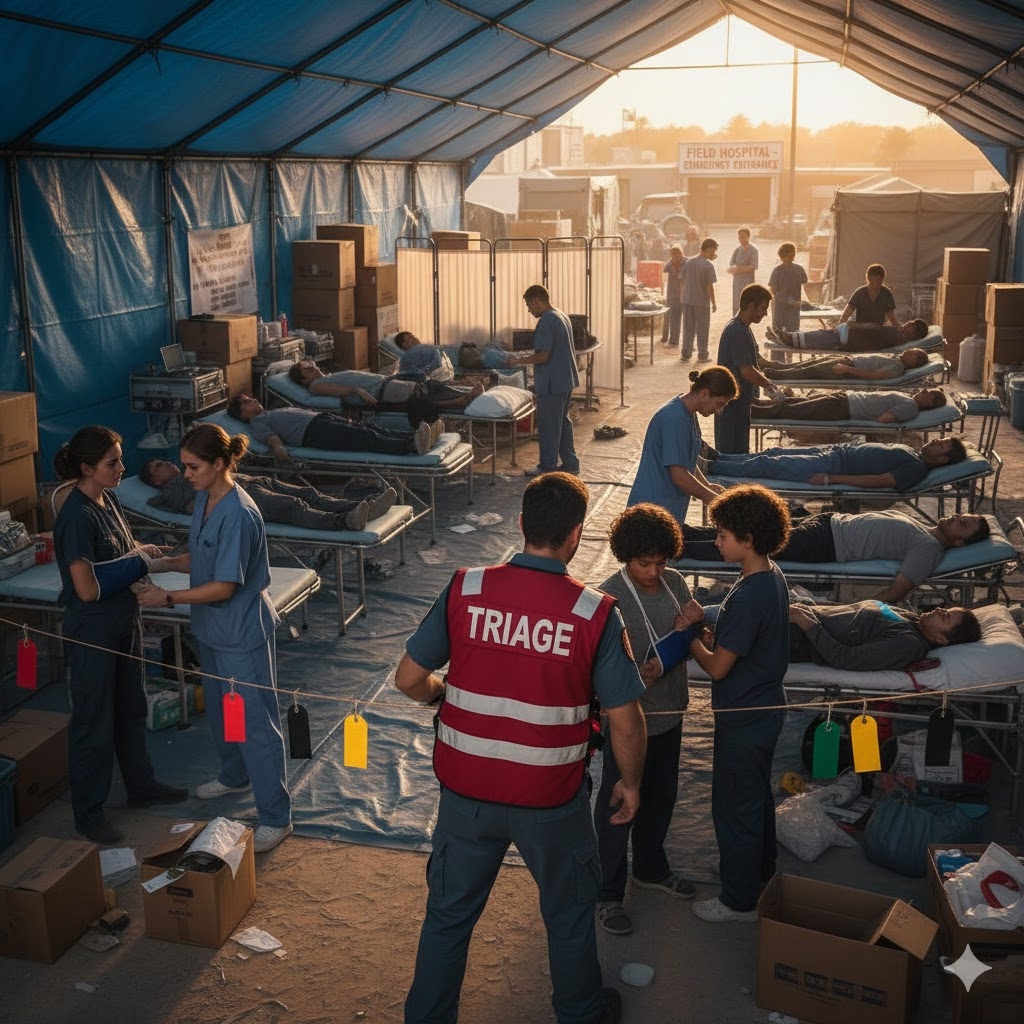
Emergencies can happen anytime, anywhere. Sometimes, hospitals or doctors face many patients at the same time. When that happens they can’t treat everyone at once. That’s where triage comes in.
In this detailed guide, you will learn the triage definition, its meaning in simple words, why it is important, how it works, and where it is used. This article is written especially for beginners, students and anyone curious about healthcare systems.
What Is Triage? (Simple Definition)
Triage Definition
Triage is a medical process used to prioritize patients based on the severity of their condition, ensuring that those who need immediate care receive treatment first.
In simple terms, triage helps medical professionals decide who should be treated first when there are multiple patients and limited resources.
Origin and History of the Word “Triage”
The word triage comes from the French word “trier”, which means to sort or to select.
Brief History:
- First used during Napoleonic wars
- Developed to treat wounded soldiers efficiently
- Later adopted by civilian hospitals and emergency services
Over time, triage became a standard medical practice worldwide, especially in emergency and disaster medicine.
Why Is Triage Important?
Triage is essential because it helps save maximum lives during critical situations.
Key Reasons Why Triage Is Important:
- Limited doctors, beds, and equipment
- Large number of patients arriving at once
- Need for fast decision-making
- Prevents overcrowding in emergency rooms
- Improves patient outcomes
Without triage, hospitals would treat patients randomly, which could result in serious patients waiting too long.
How Does the Triage Process Work?
The triage process usually follows a quick assessment of each patient.
Step-by-Step Triage Process:
- Assess vital signs (pulse, breathing, blood pressure)
- Check level of consciousness
- Identify life-threatening conditions
- Assign priority category
- Direct patient to appropriate care area
This process is often completed within minutes.
Triage Categories (Color Coding System)
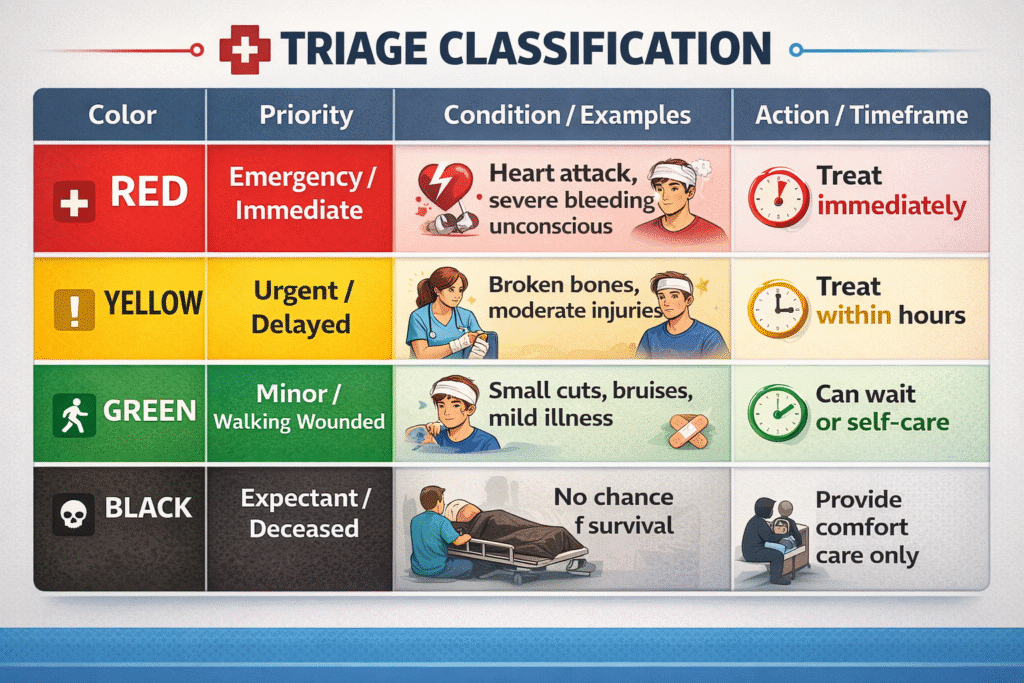
One of the most common triage methods uses color codes.
🟥 Red – Immediate (Emergency)
- Life-threatening injuries
- Requires immediate treatment
- Examples:
- Severe bleeding
- Cardiac arrest
- Breathing failure
🟨 Yellow – Urgent
- Serious but not immediately life-threatening
- Can wait for a short time
- Examples:
- Broken bones
- Large wounds without heavy bleeding
🟩 Green – Minor
- Mild injuries
- Treatment can be delayed
- Examples:
- Small cuts
- Minor burns
⬛ Black – Expectant/Deceased
- No signs of life or extremely low survival chance
- Resources are not used in mass casualty events
Types of Triage
There are several types of triage used in different medical settings.
1. Emergency Department Triage
Used in hospital emergency rooms to manage patient flow.
Purpose:
- Reduce waiting time
- Identify critical cases quickly
2. Disaster Triage
Used during:
- Earthquakes
- Floods
- Terrorist attacks
- Large accidents
Goal: Save the maximum number of lives with limited resources.
3. Military Triage
Used on battlefields.
Focus:
- Rapid assessment
- Quick evacuation decisions
4. Telephone Triage
Used in:
- Telemedicine
- Medical helplines
Doctors or nurses assess symptoms over the phone and guide patients.
5. Pediatric Triage
Special triage system for children, considering:
- Age-specific vital signs
- Growth and development factors
Common Triage Systems Used Worldwide
Different healthcare systems use different triage scales.
Popular Triage Systems:
- START (Simple Triage and Rapid Treatment)
- ESI (Emergency Severity Index)
- Manchester Triage System
- Canadian Triage and Acuity Scale (CTAS)
Each system has its own guidelines but follows the same basic principle: prioritize care.
Examples of Triage in Real Life
Example 1: Hospital Emergency Room
Five patients arrive:
- Heart attack patient → treated first
- Fever patient → waits longer
Example 2: Road Accident
- Person not breathing → immediate attention
- Person with minor injury → delayed care
Example 3: Natural Disaster
- Survivors with severe injuries → priority
- Minor injuries → secondary treatment
Who Performs Triage?
Triage is usually performed by trained professionals such as:
- Emergency nurses
- Paramedics
- Doctors
- Disaster response teams
They receive special training to make fast and accurate decisions.
Skills Required for Effective Triage
Triage professionals must have:
- Strong clinical knowledge
- Quick decision-making skills
- Ability to work under pressure
- Emotional control
- Excellent communication skills
Ethical Challenges in Triage
Triage involves difficult decisions.
Ethical Concerns:
- Who gets treated first?
- Limited resources vs patient needs
- Emotional stress on healthcare workers
Despite these challenges, triage decisions are based on medical necessity, not personal bias.
Advantages of Triage
- Saves lives
- Improves emergency efficiency
- Reduces chaos
- Ensures fair resource allocation
- Enhances patient safety
Limitations of Triage
- Decisions must be made quickly
- Risk of human error
- Emotional burden on staff
- Not perfect in all situations
However, even with limitations triage remains essential in healthcare.
Triage Definition for Exams
Triage:
A process of sorting patients based on the severity of their condition to determine priority of medical treatment.
Perfect for:
- Nursing exams
- Medical entrance tests
- Healthcare interviews
Final Thoughts on Triage
Triage is one of the most important systems in modern healthcare. It ensures that during emergencies, time and resources are used wisely to save as many lives as possible. Understanding the triage definition helps us appreciate how healthcare professionals work under pressure to protect human life. read more
About the Author